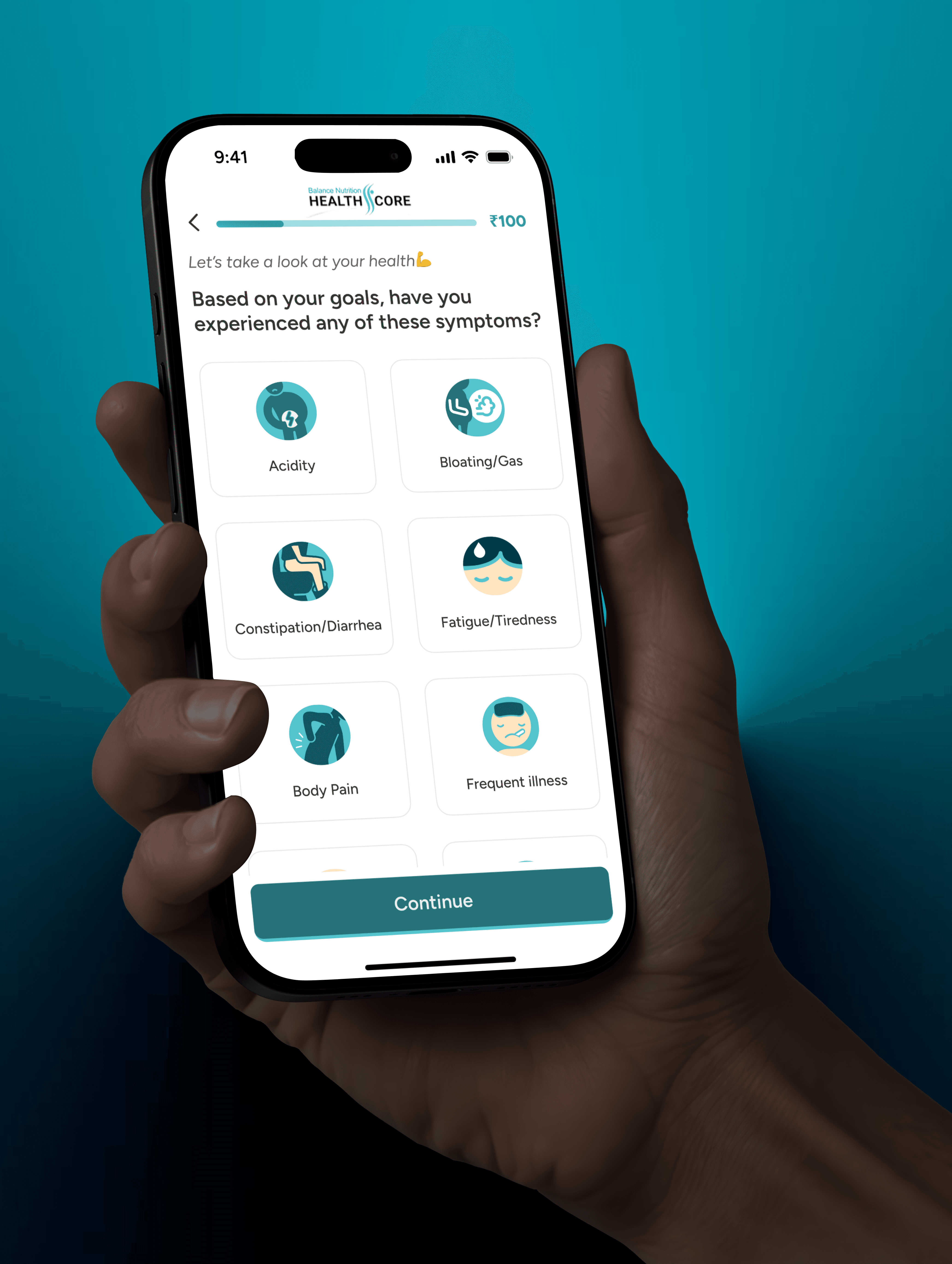
About Balance Nutrition
Balance Nutrition is a health-tech platform that provides personalized, app-based diet programs for weight loss and clinical health. It is known for its "no-deprivation" philosophy, offering lifestyle-friendly tools like dine-out and alcohol guides alongside expert nutritionist mentoring.
Problems faced:
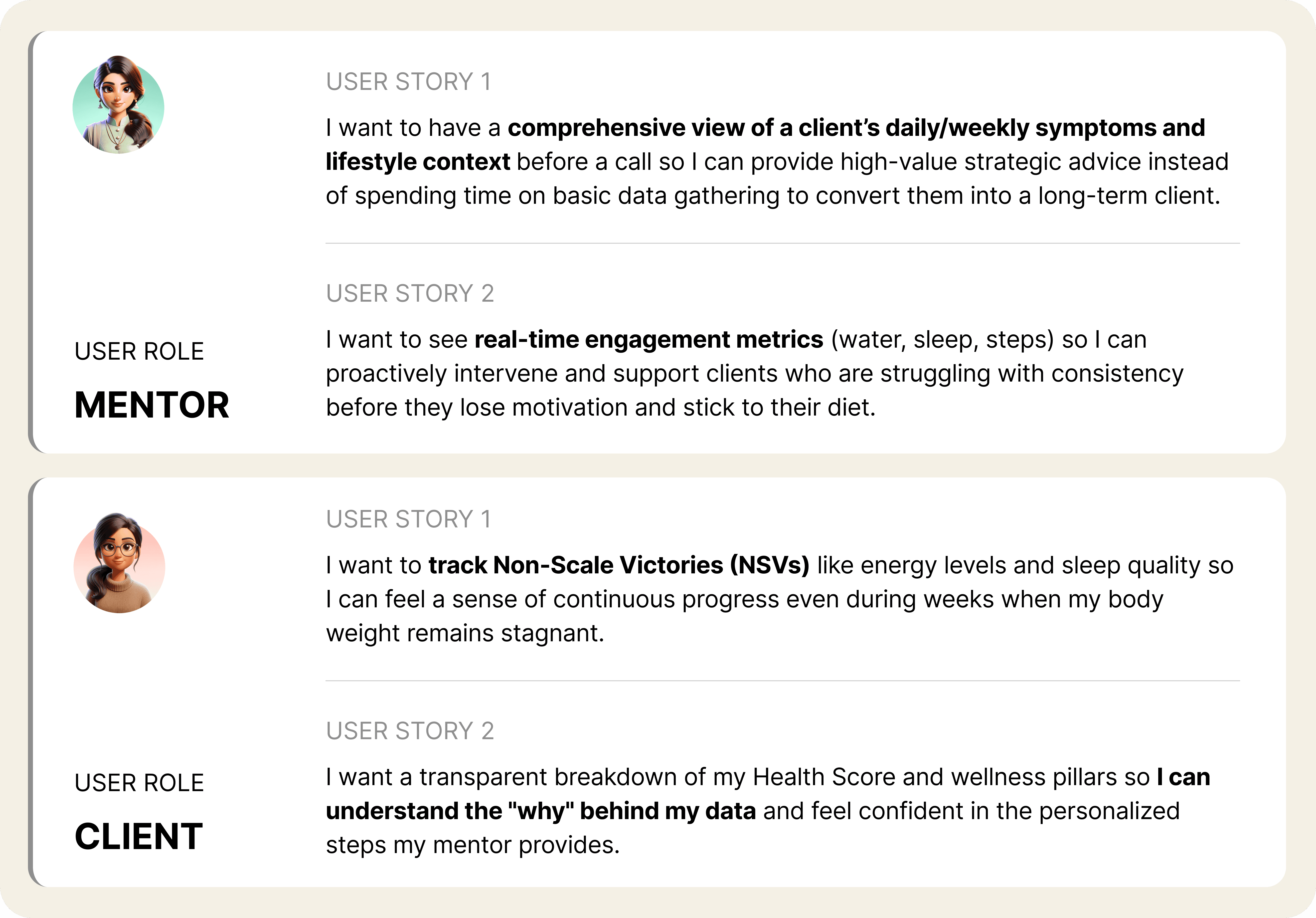
The primary business challenge was a leaking sales funnel and low client retention caused by a "monotonous" digital experience. While the brand promises high-end personalization, the actual product delivered a static, unengaging interface that fails to convert leads into long-term clients or keep existing clients motivated.
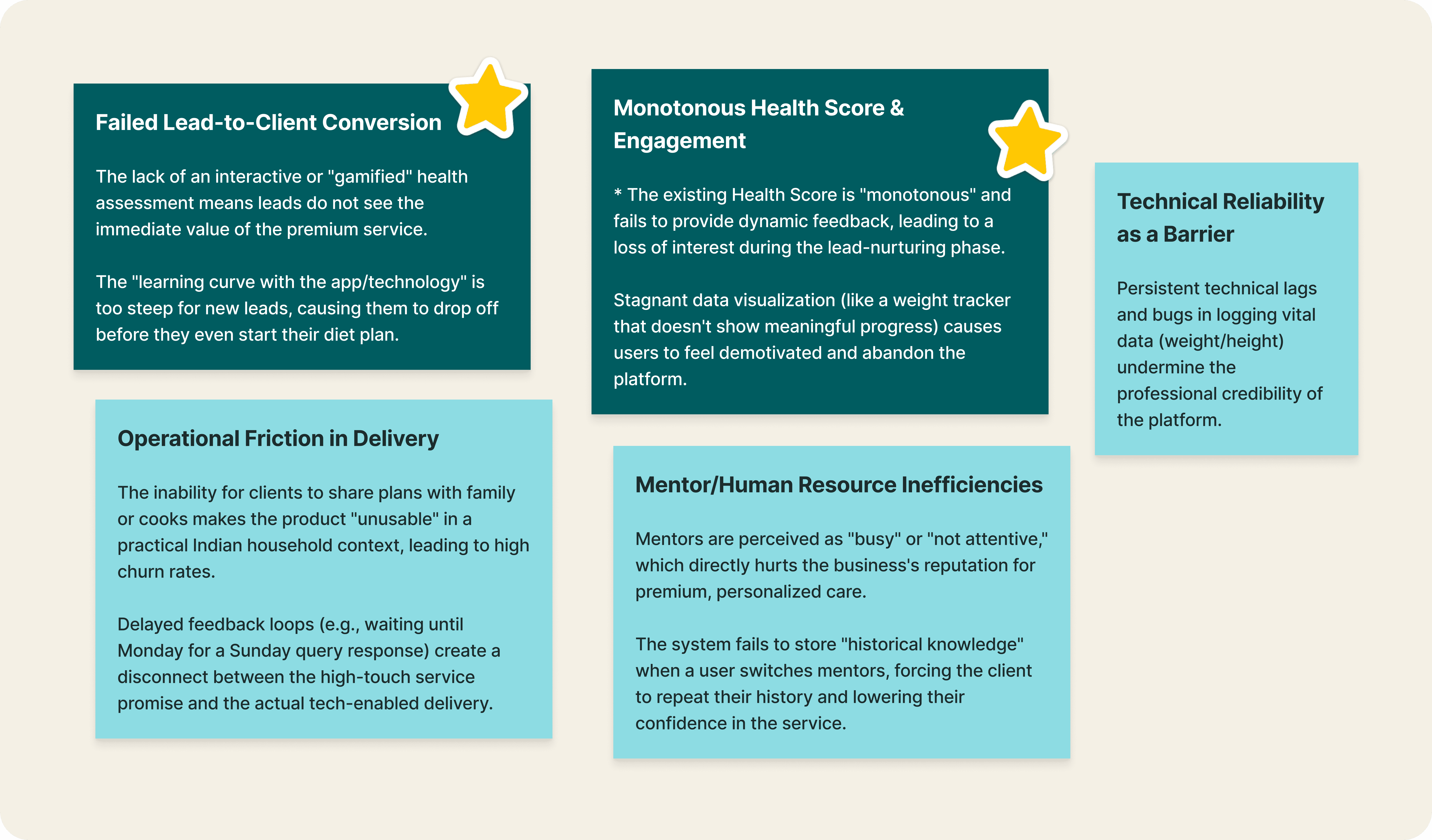
What do our 2 key stakeholders need?
To ground the design in real human needs, I translated my research findings into user stories that defined our core feature set and success metrics.
2 task flows were defined:
Task Flow 1: The Interactive "Healthscore" (Lead Generation)
Goal: Transform the static Health Score into an interactive lead-to-client conversion tool.
Task Flow 2: The "360° Wellness Tracker" (Client Retention)
Goal: Consolidate all wellness data into a single, shareable view for both the client and the mentor.
Conducting UX Audit | Healthscore Flow
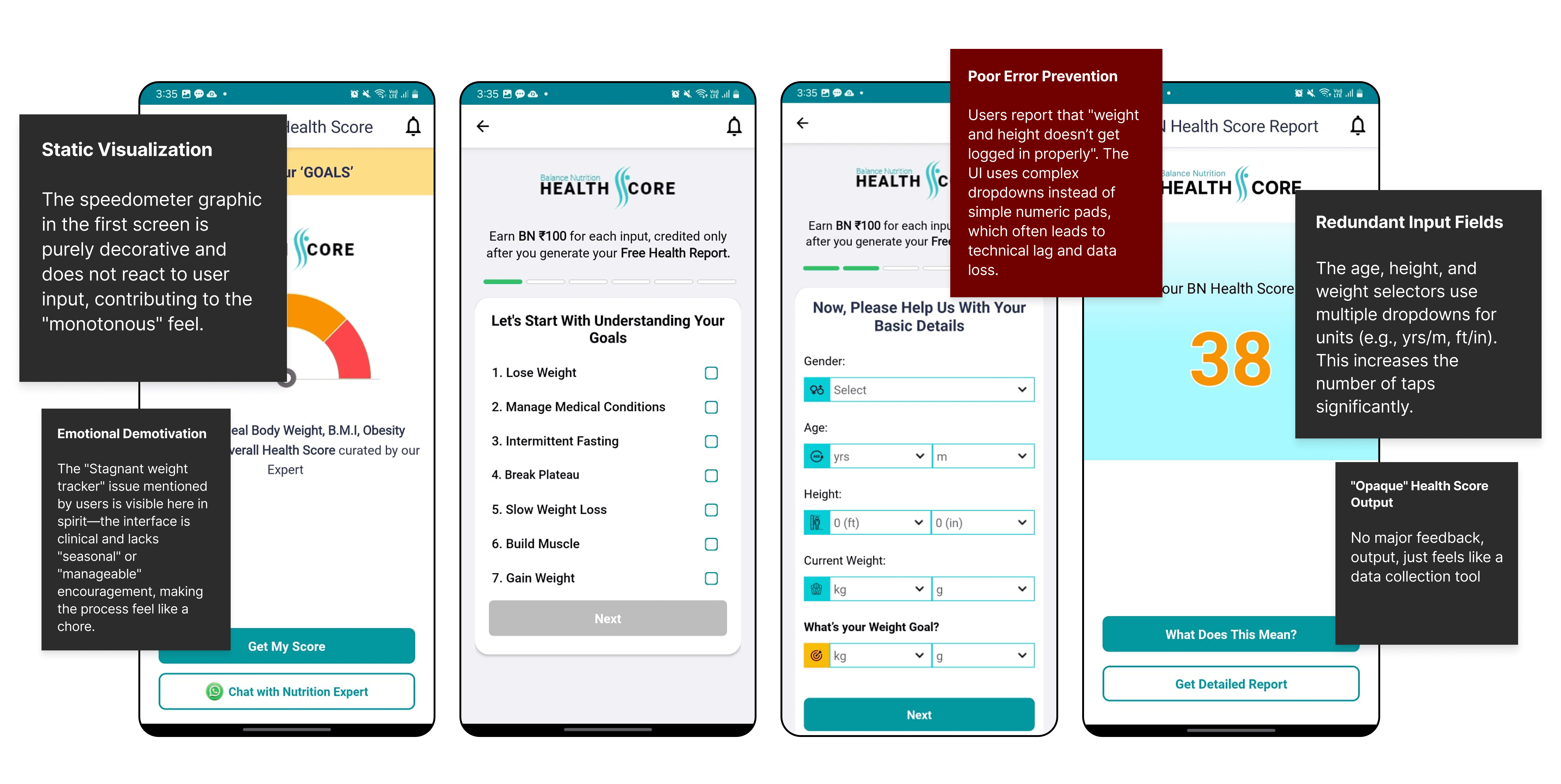
Static "Value-Less" Visual: The Health Score was a decorative speedometer that remains static during the data entry process. It fails to provide real-time feedback or "Aha!" moments rather than receiving a personalized health diagnostic.
The "Black Box" Metric: There is zero transparency on how the score is calculated.
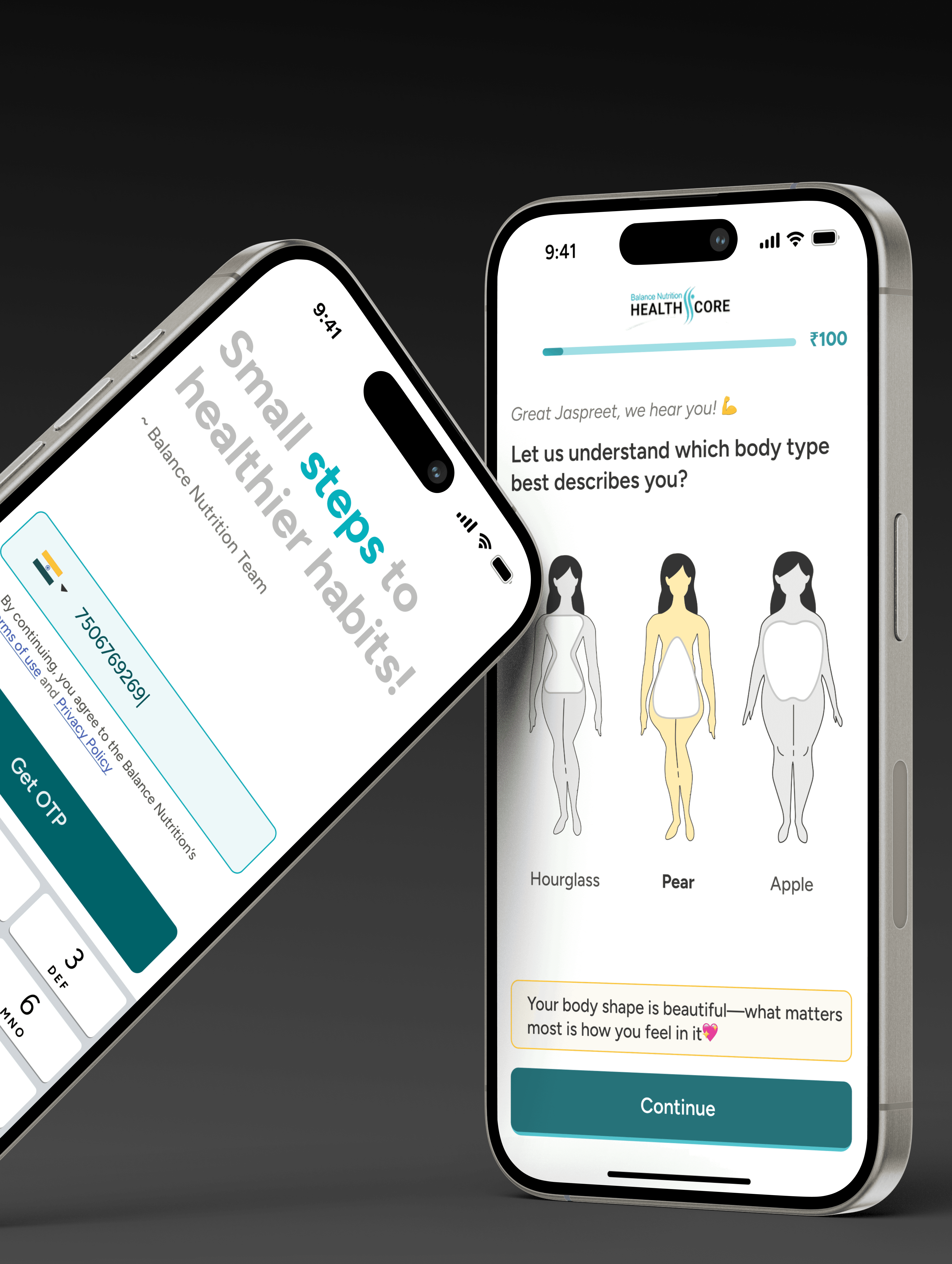
Delayed Gratification: The Health Score only reveals itself after a high-friction process (multiple screens and complex dropdowns). By not offering "micro-scores" or instant insights for each category (e.g., "Your Hydration Score is 8/10"), the app loses the lead's interest before the conversion is complete.
Redesigned for impact
"Healthscore" feature makeover from a Passive Logger to an Active Health Diagnostic.
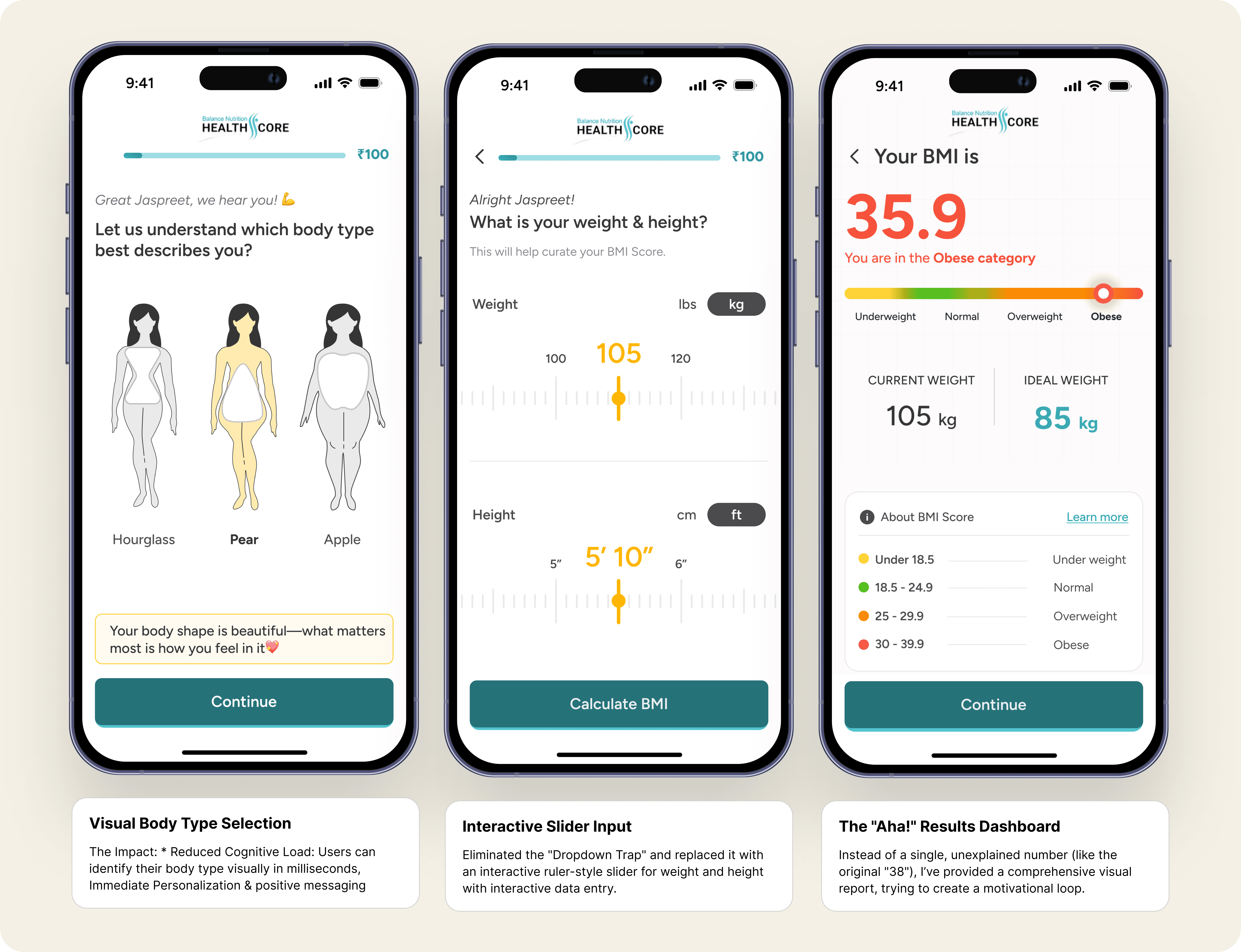
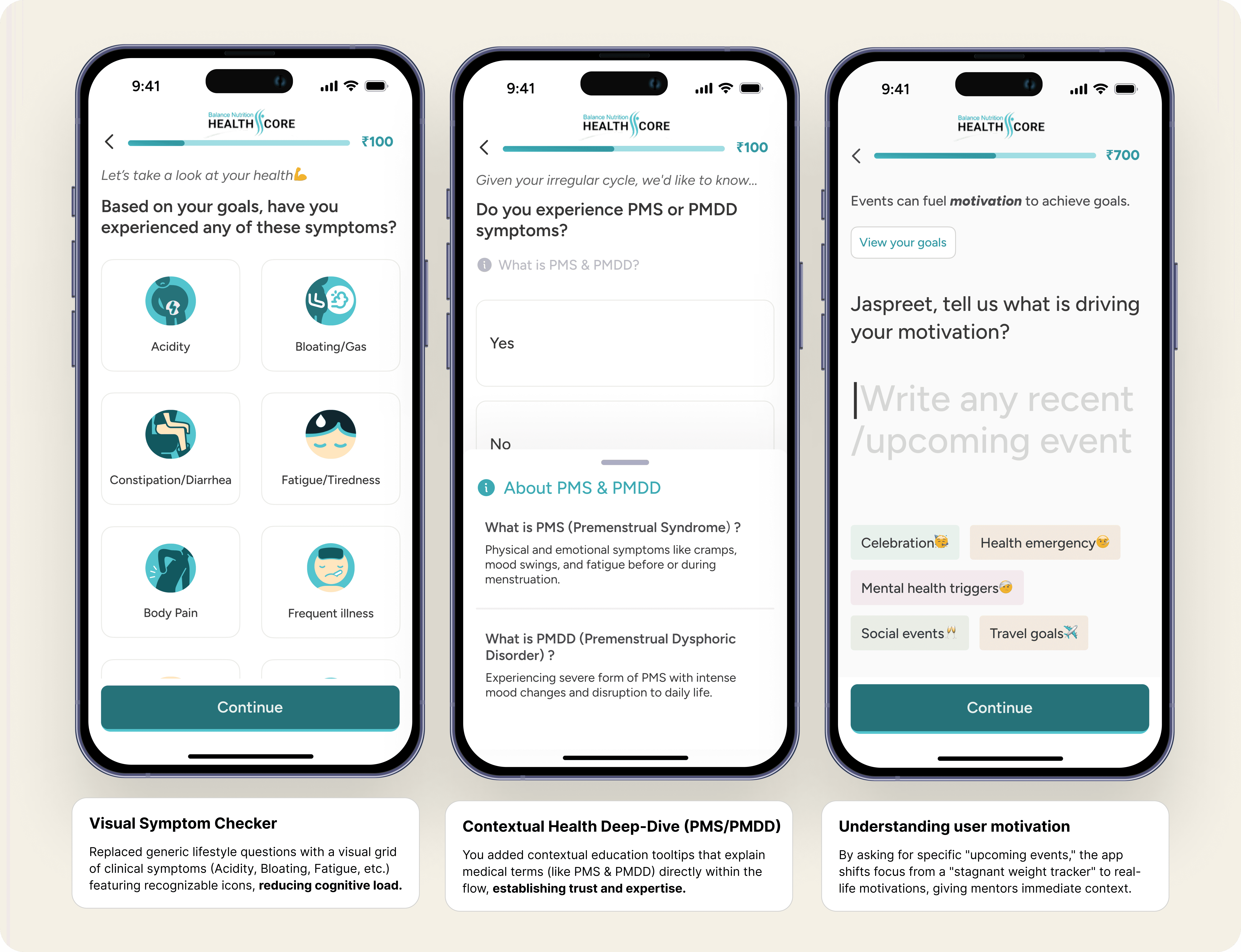
Designing the "Healthscore Report"
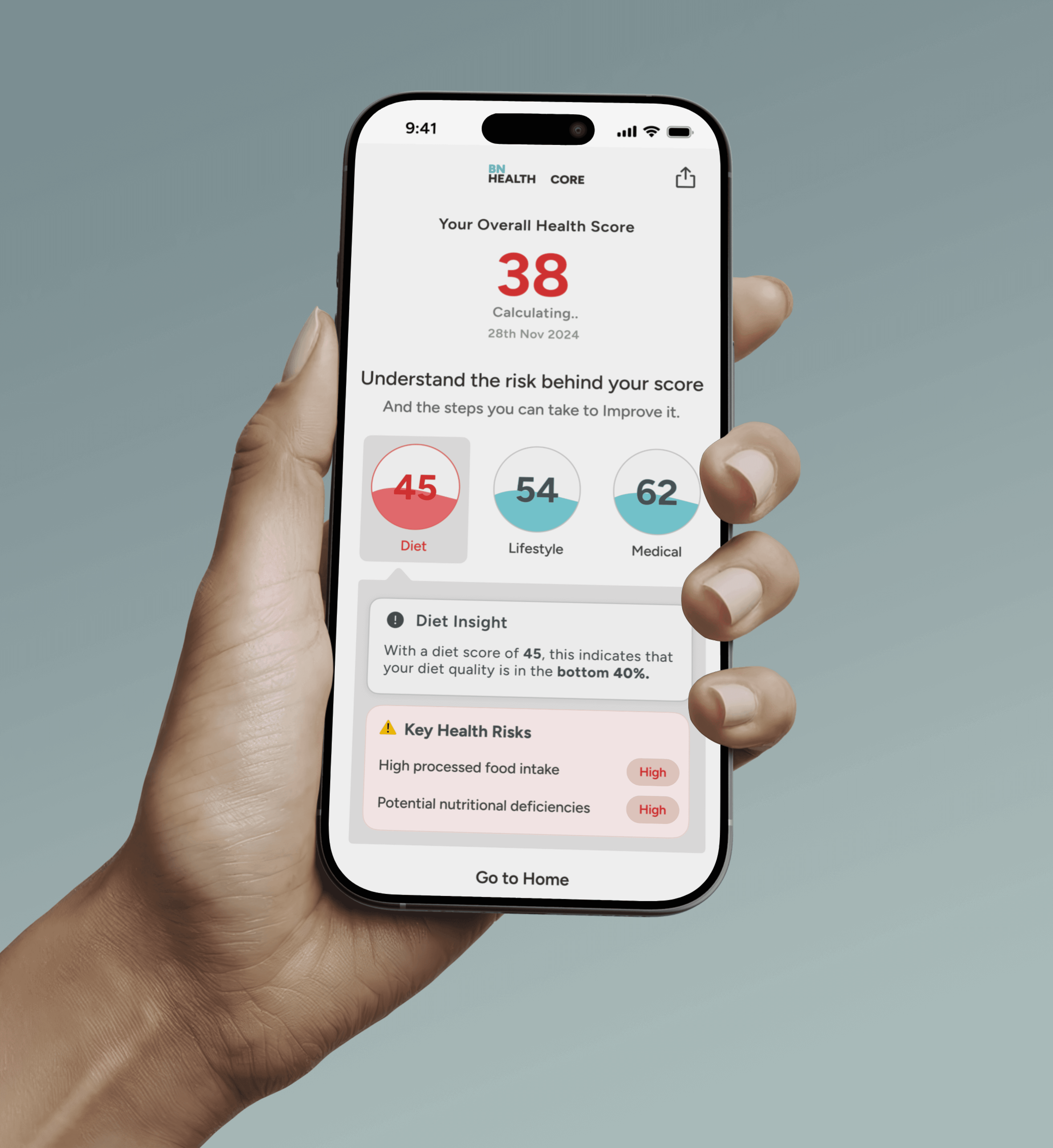
The revamped Health Score Report is designed as a dynamic, post-assessment output that transforms clinical data into a clear, actionable story for the user.
1. The Hero Score & Risk Indicator
At the top of the report, the user is greeted with a large, prominent numerical score (e.g., 38/100) paired with a high-visibility Status Tag (e.g., "High Risk" or "Action Needed"), gives the user an instant baseline of their health status.
2. Categorized "Wellness Pillars"
The report breaks down the overall score into three distinct sub-scores: Diet, Lifestyle, and Medical, making the diagnostic feel credible and personalized.
3. The "Path to Improvement" (CTA)
The final section of the report is the Conversion Bridge, which features a prominent "Book Free Consultation" button.
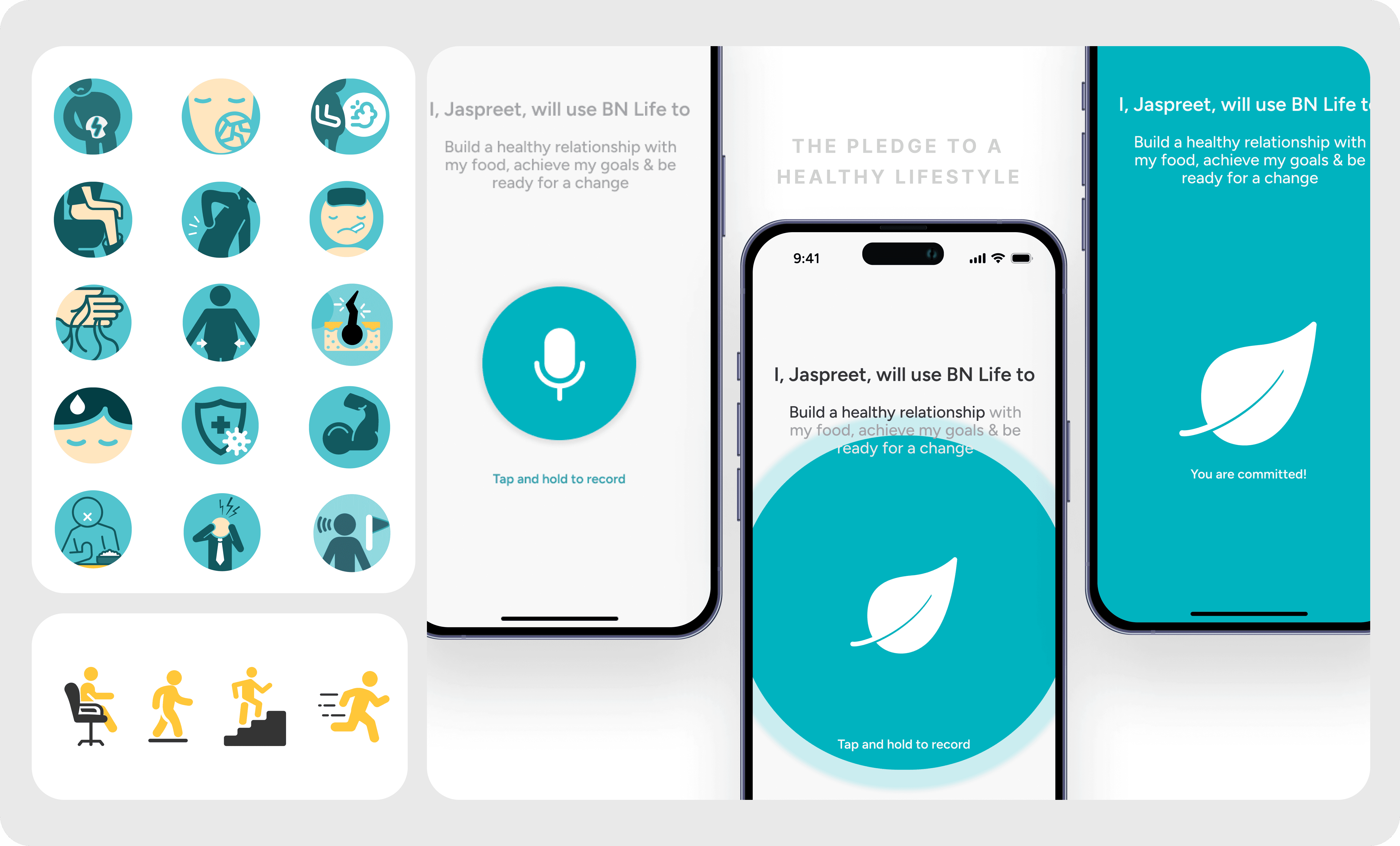
Solutions Provided:
Core Problems (The "Why")
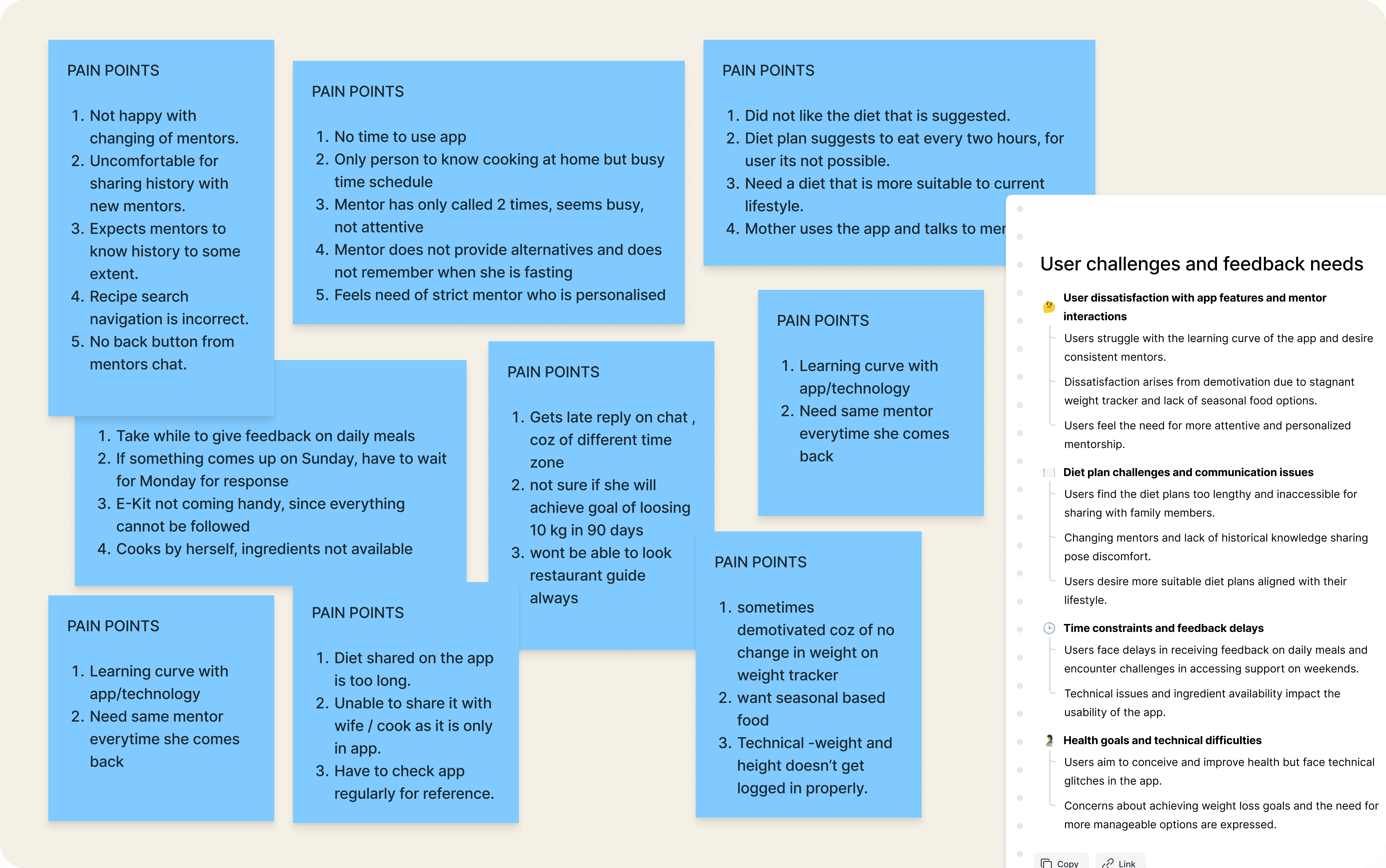
Before the makeover, the trackers suffered from three "Experience Killers":
Technical Friction: Complex dropdowns for weight and height were prone to "lag," making simple daily logging feel like a technical hurdle.
Psychological Burnout: The heavy focus on weight-only tracking meant that if the scale didn't move, users felt immediate demotivation, even if they were sleeping better or feeling less bloated.
The "Support Gap": Users found it impossible to share their locked-in-app plans with their family or cooks, who were the ones actually preparing their meals.
The Usability Testing Process (The "How")
Testing with 40+ clients allowed for a robust qualitative and quantitative feedback loop:
Product Strategy: From "Chore" to "Companion"
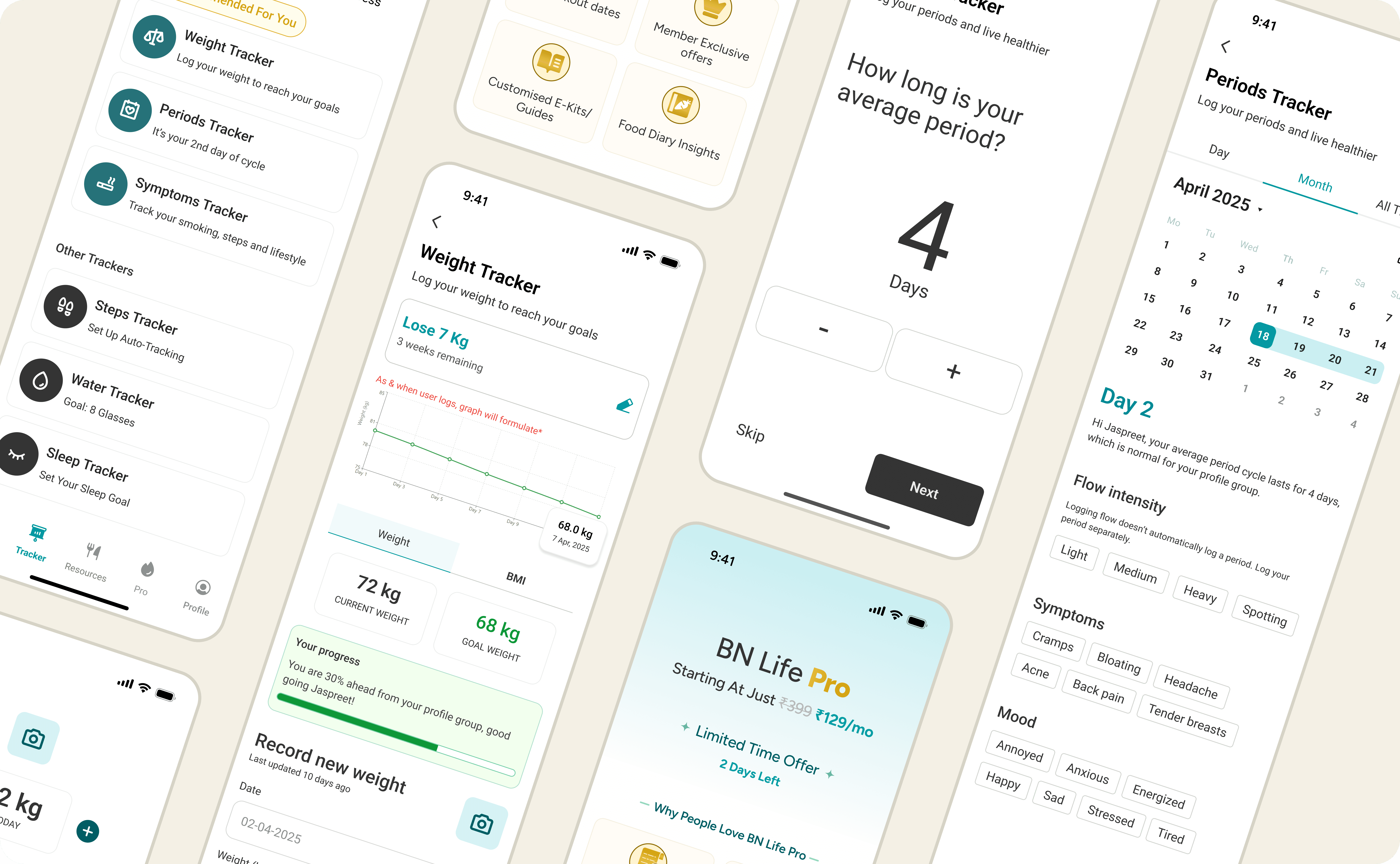
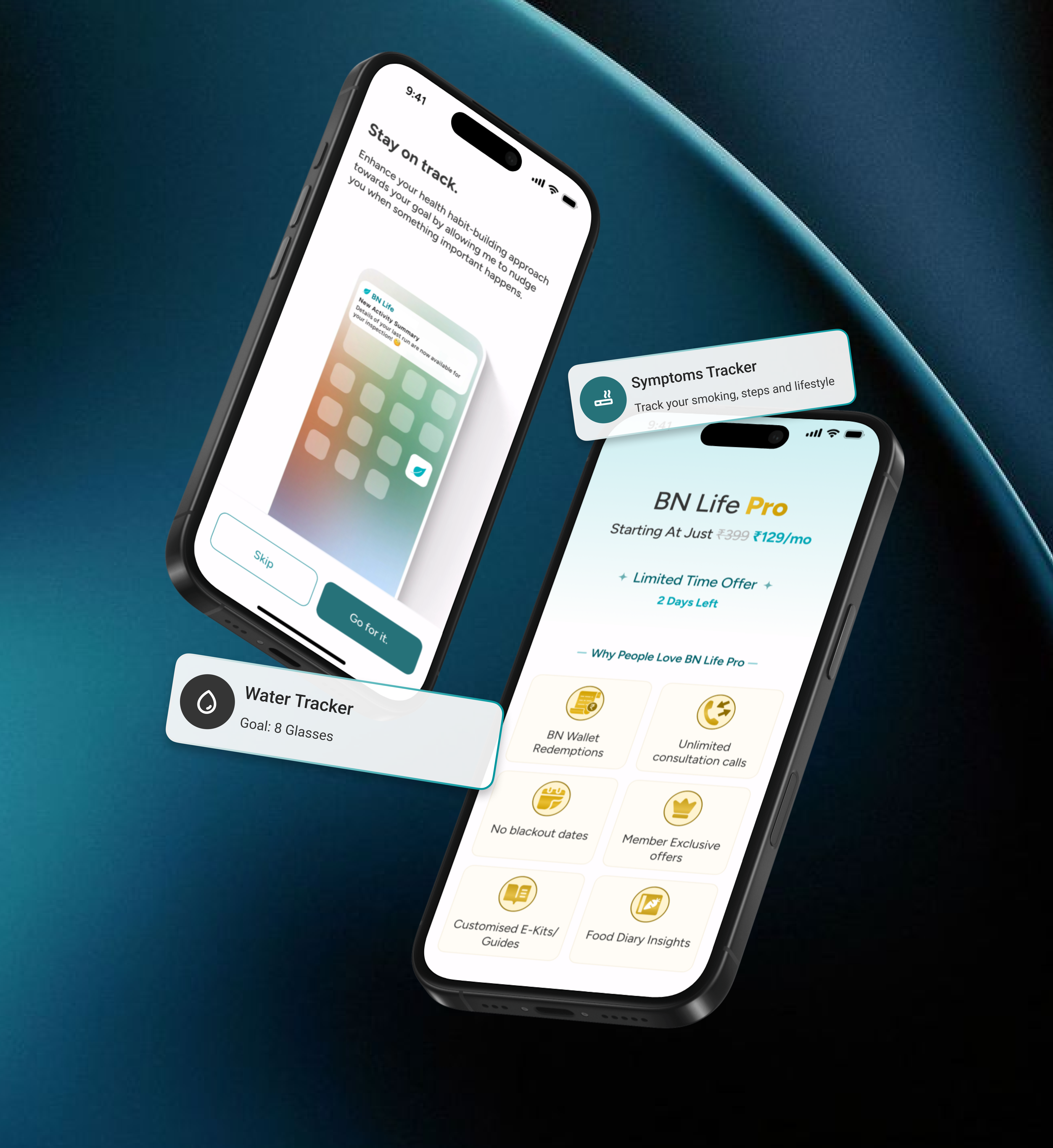
Introducing BN Wellness Trackers
1. Frictionless Data Entry (Solving the Technical Wall)
To eliminate the reported "learning curve" and "technical lag," we replaced high-friction elements with tactile interactions.
Impact: This ensures data accuracy and removes the frustration of "logging errors," making the daily ritual of tracking feel effortless for the user.
2. 360° Wellness Visualization (Solving the Emotional Wall)
Clients often felt demotivated by a "stagnant weight tracker." Our solution shifts the focus to Non-Scale Victories (NSVs).
Impact: If the weight doesn't move, the user still sees progress in their hydration or activity levels. This maintains dopamine loops and prevents the burnout that leads to program abandonment.
3. Contextual Mentor Assessment (Solving the Support Gap)
To address the feeling of "busy/non-attentive mentors," the tracker now acts as a silent bridge between the client and the coach.
Impact: Mentors no longer have to "ask the same questions" during every call. They can proactively see that a user’s weight spike is tied to their cycle or a travel event, providing the "personalized care" the brand promises.